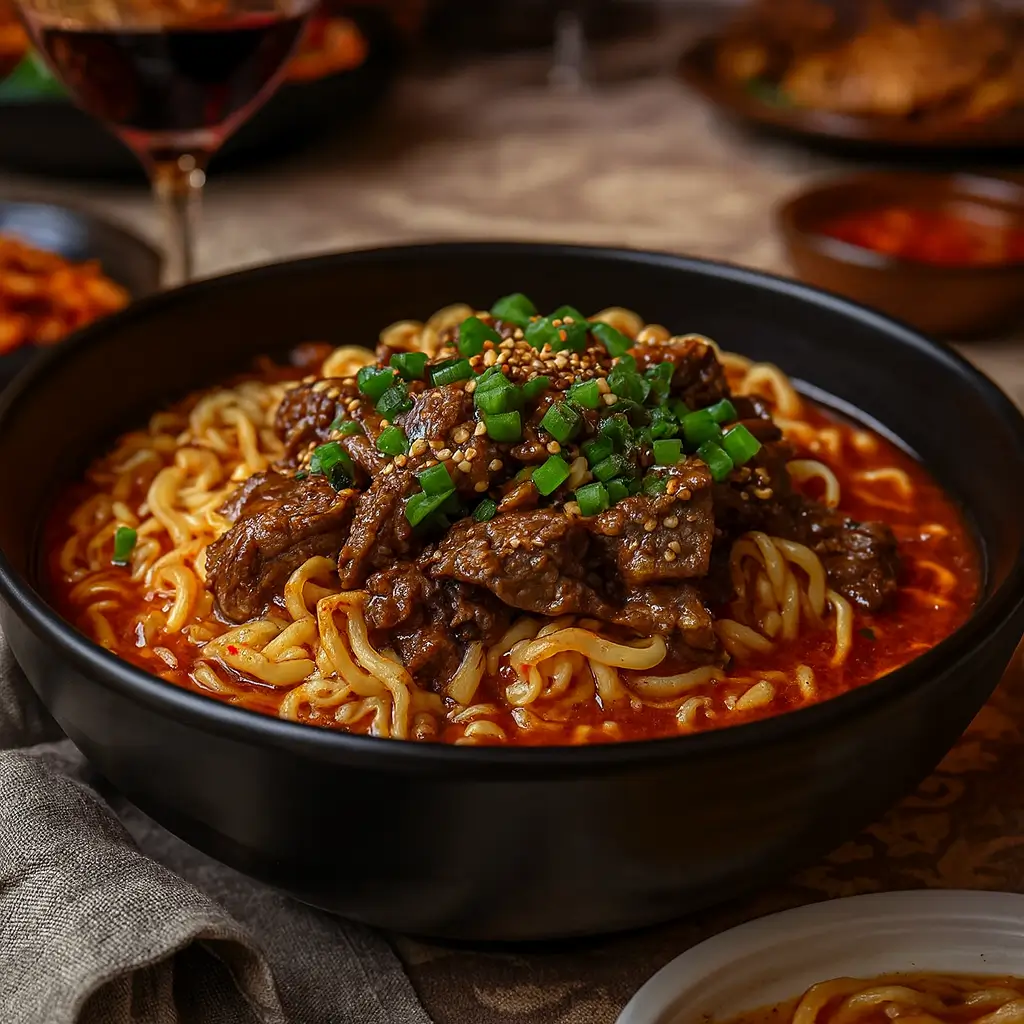
Spicy Korean Gochujang Beef Noodles aren’t just another dinner idea—they’re the kind of dish that wakes up your taste buds and your weeknight routine. If your evenings are a blur of to-do lists, school runs, and “what’s for dinner?” panic, this bold and saucy noodle bowl will feel like a culinary hug… with a little kick. The gochujang paste brings a sweet, spicy, and deeply savory heat that pairs perfectly with tender ground beef and chewy noodles. Best of all? You’ll have dinner on the table in just 30 minutes. For those who love quick meals with big flavor (without a mountain of dirty dishes), this one’s a keeper.
Table of Contents
What is Spicy Korean Gochujang Beef Noodles?
Spicy Korean Gochujang Beef Noodles combine the rich, umami-packed flavors of Korean cuisine with the heartiness of a noodle stir-fry. Gochujang—a thick, fermented chili paste—adds depth and that signature sweet-spicy tang that makes this dish so irresistible. It’s not overwhelmingly hot; it’s more like a gentle burn that lingers just long enough to make you crave another bite. The noodles soak up a glossy sauce made with soy sauce, sesame oil, and coconut cream, creating a balance of creamy, spicy, and savory. Think of it as a love child between a Korean stir-fry and a comforting bowl of noodles—satisfying, fast, and full of personality.
Reasons to Try Spicy Korean Gochujang Beef Noodles
First, it’s quick—30 minutes, start to finish. That’s faster than waiting for takeout and way more rewarding. Second, it’s flexible: swap beef for turkey, chicken, or tofu; use ramen, udon, or even spaghetti in a pinch. Third, it’s family-approved. The sauce has that addictive “sweet-heat” combo that even picky eaters might fall for. Plus, it’s a one-pan wonder, meaning fewer dishes to tackle later. If you love recipes that feel restaurant-worthy but fit into your Tuesday-night schedule, this is your kind of meal. And if you’re on a roll with noodle nights, you’ll probably adore Thai Drunken Noodles or our crowd-favorite Korean-Style Ground Beef Ramen.
Ingredients Needed to Make Spicy Korean Gochujang Beef Noodles
For the Noodles:
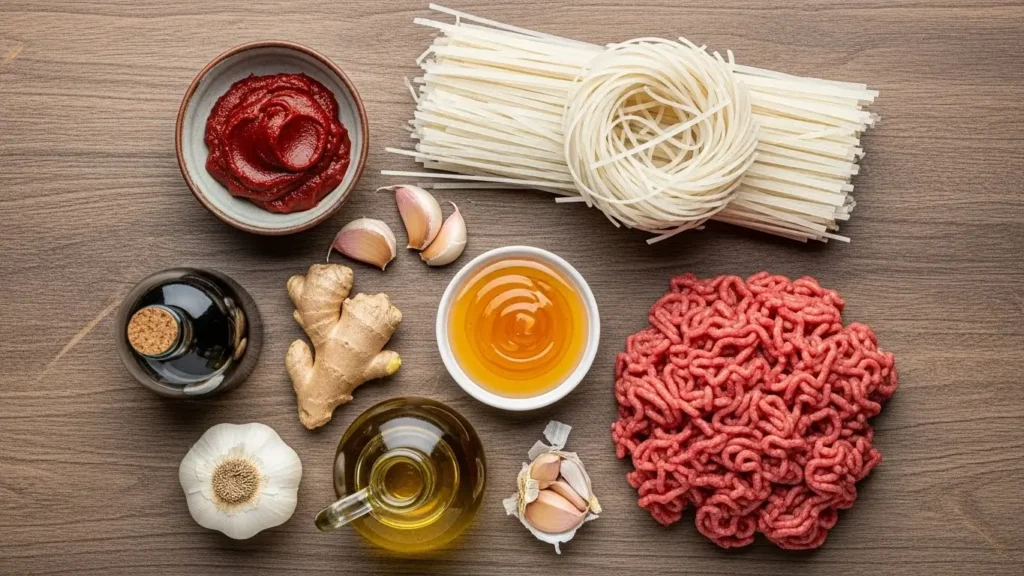
- 12 oz rice noodles (or ramen, udon, or any noodles you like)
For the Protein:
- 1 lb ground beef (or turkey, chicken, or tofu for a lighter twist)
For the Sauce:
- ¼ cup low-sodium soy sauce or tamari
- ¼ cup gochujang paste (adjust to taste)
- 2 tbsp coconut cream (or heavy cream)
- 2 tsp tomato paste
- 2 tbsp water
- 2 tbsp honey or brown sugar (or maple syrup for a vegan option)
- 1 tbsp toasted sesame oil
- 1 tbsp rice vinegar
- 2 tsp minced garlic
- 1 tsp grated fresh ginger
- ½ tsp red pepper flakes (optional)
Instructions to Make Spicy Korean Gochujang Beef Noodles (Step-by-Step Guide)
Making Spicy Korean Gochujang Beef Noodles is easier than you might think — especially when you follow this step-by-step breakdown. In about 30 minutes, you’ll go from a fridge full of ingredients to a steaming bowl of saucy, satisfying noodles that taste like they came straight from your favorite Asian takeout spot (but better). Let’s walk through it together — apron optional, enthusiasm required.
Step 1: Prepare Your Noodles (Step-by-Step)
Start by bringing a large pot of salted water to a boil. Salt might seem minor, but it’s key to infusing flavor right into the noodles. Once boiling, add your rice noodles — or whatever noodles you’re using, like ramen or udon — and cook according to the package directions. Most rice noodles only need about 4–6 minutes.
Keep an eye on them; overcooked noodles turn mushy and don’t hold the sauce as well.
Once tender, drain them immediately and rinse under cold water to stop the cooking process. Toss the noodles with a small dab of butter or sesame oil to prevent sticking. If you’re new to handling rice noodles, you might find this quick tip guide on Easy Saucy Ramen Noodles handy for learning how to keep them perfectly springy and sauce-ready.
Step 2: Brown the Beef (Step-by-Step)
In a large skillet, heat a drizzle of oil over medium heat. Add your ground beef (or ground turkey or chicken for a lighter version) and let it cook undisturbed for a minute or two to develop that beautiful sear — that’s where the flavor magic happens.Once you see the edges browning, use a wooden spoon or spatula to break up the meat into crumbles. Continue cooking for about 5–7 minutes until no pink remains.
If you’re going plant-based, you can easily swap in tofu or tempeh, just like in this hearty Mongolian Ground Beef Noodles recipe, which adapts beautifully for vegetarian options.Once cooked, drain any excess grease to keep your sauce from turning oily later. Leave the beef in the skillet — it’s about to meet its spicy soulmate.
Step 3: Whisk the Sauce Together (Step-by-Step)
Now comes the best part — that rich, glossy gochujang sauce. In a medium mixing bowl, combine:
- ¼ cup low-sodium soy sauce or tamari
- ¼ cup gochujang paste (start small if you’re new to it — you can always add more)
- 2 tablespoons coconut cream (for a smooth, slightly creamy texture)
- 2 teaspoons tomato paste
- 2 tablespoons water
- 2 tablespoons honey or brown sugar
- 1 tablespoon toasted sesame oil
- 1 tablespoon rice vinegar
- 2 teaspoons minced garlic
- 1 teaspoon grated fresh ginger
- ½ teaspoon red pepper flakes (optional)
Whisk until it’s all blended into a smooth, deep-red sauce. You’ll notice the texture — thick yet pourable, glossy yet creamy — it’s pure flavor gold. If you prefer a milder version, cut the gochujang in half or try using Sriracha instead (as recommended in our Spicy Vegetarian Ramen, which uses gentler heat).
Step 4: Combine the Noodles and Sauce (Step-by-Step)
Add your cooked noodles back into the skillet with the browned beef. Pour in half of the sauce and toss gently using tongs to coat every strand. This first round helps the noodles absorb the flavor from the inside out. Then pour in the remaining sauce, stirring constantly so the noodles are evenly coated and glossy. The aroma at this point? Absolute heaven — smoky, spicy, and a little sweet.
Keep the heat on low for another minute or two to let the sauce cling to the noodles. If it thickens too much, splash in a tablespoon of water to loosen it up.
Step 5: Taste, Adjust, and Garnish (Step-by-Step)
Now’s the time to give your dish a taste test (chef’s privilege!). Need more spice? Add another dab of gochujang or a sprinkle of red pepper flakes. Want a touch more sweetness? A quick drizzle of honey will balance it perfectly. Once it’s seasoned to your liking, transfer the noodles to bowls.
Garnish generously — sliced scallions for freshness, sesame seeds for crunch, or a few sprigs of cilantro if you’re feeling fancy. For extra flavor depth, drizzle a few drops of sesame oil before serving. You could also pair these noodles with a cozy side like Tasty Roasted Winter Vegetable Soup for the ultimate comfort meal.
Step 6: Serve and Savor (Step-by-Step)
Serve the Spicy Korean Gochujang Beef Noodles immediately while hot and saucy. The noodles should be glossy and tender, coated in that irresistible blend of spice and umami. This dish is perfect for busy weeknights when you want something fast yet packed with flavor.
If you want to take your noodle night to the next level, try serving it alongside recipes like Slow Cooker Beef and Noodles or French Onion Beef and Noodles for a comforting, flavor-packed feast.
Bonus Step-by-Step Tip for Busy Cooks:
If you’re prepping ahead, mix the sauce up to two days in advance and store it in the fridge. When dinnertime hits, just cook your beef and noodles, and you’ll have this dish ready in under 15 minutes — a trick that busy moms and professionals swear by. For more time-saving meals like this, check out our Dump and Go Crockpot Mongolian Beef, another reader favorite.
Why This Step-by-Step Guide Works
This step-by-step method doesn’t just tell you what to do — it shows you how to bring out the best textures and flavors in every element. You’re not just cooking noodles; you’re layering flavor, balancing heat and sweetness, and building a dish that feels like comfort food with a spicy twist. Each step is intentional, designed to help you create restaurant-quality noodles at home, no culinary degree required.
What to Serve with Spicy Korean Gochujang Beef Noodles
These noodles are plenty satisfying on their own, but if you want to round things out, try a crisp cucumber salad or some simple steamed broccoli. A side of kimchi brings a delicious crunch and tang that balances the rich gochujang sauce beautifully. If you’re serving guests, pair it with light appetizers like Garlic Parmesan New York Pizza Rolls or a comforting soup such as Tasty Roasted Winter Vegetable Soup. And for dessert? Something cool and sweet, like a scoop of vanilla ice cream or fruit sorbet, will help tame the spice.
Key Tips for Making Spicy Korean Gochujang Beef Noodles
- Control the heat: Start with less gochujang and add more if you like it fiery. Remember, gochujang’s heat builds slowly!
- Don’t overcook the noodles: They should be tender but still have a little chew, especially if you’re using rice noodles.
- Balance the sauce: If it’s too spicy, add a bit more honey or coconut cream to mellow it out.
- Use fresh aromatics: Garlic and ginger bring the whole dish to life—don’t skip them!
- Make it your own: Try adding shredded carrots, mushrooms, or bell peppers for a veggie-packed twist.
Storage and Reheating Tips for Spicy Korean Gochujang Beef Noodles
If you somehow have leftovers (they disappear fast), store them in an airtight container in the fridge for up to three days. To reheat, add a splash of water or broth to loosen the sauce and warm it gently on the stove or in the microwave. Avoid overcooking when reheating, as the noodles can get too soft. You can also freeze the beef and sauce separately for up to a month—just boil fresh noodles when you’re ready to enjoy it again.
FAQs
Can I make this vegetarian? Absolutely! Swap the beef for tofu, tempeh, or your favorite plant-based crumbles.
Is gochujang very spicy? It’s more flavorful than fiery—think smoky, sweet, and savory with just the right amount of kick.
Can I meal prep this? Yes! Store the sauce separately and toss with freshly cooked noodles for quick lunches all week.
What if I can’t find gochujang? Try a smaller amount of Sriracha or chili garlic sauce as a substitute, though the flavor won’t be quite as complex.
Final Thoughts
Spicy Korean Gochujang Beef Noodles are the kind of meal that makes a random Tuesday night feel like a mini celebration. It’s quick, bold, and endlessly adaptable—the kind of recipe that turns “ugh, what’s for dinner?” into “wow, can we have this again?” Whether you’re new to Korean flavors or already obsessed, this dish brings just the right balance of comfort and excitement. Want to keep the noodle magic going? Don’t miss our Mongolian Ground Beef Noodles for another weeknight favorite that’s just as crave-worthy.
Visit our Pinterest for regular slow cooker recipe updates, or join our Facebook discussions where cooking fans exchange their favorite hearty meal ideas.
Print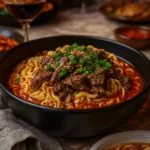
Spicy Korean Gochujang Beef Noodles: A Quick Weeknight Feast
- Prep Time: 10 minutes
- Cook Time: 20 minutes
- Total Time: 30 minutes
- Yield: 4 servings 1x
- Category: Dinner
- Method: Stovetop
- Cuisine: Korean
Description
Spicy Korean Gochujang Beef Noodles are a vibrant and flavorful dish perfect for busy weeknights.
Ingredients
- 12 oz rice noodles or noodles of choice (ramen or udon can be substituted)
- 1 lb ground beef, turkey, or chicken (or plant-based alternative like tofu)
- 1/4 cup low sodium gluten-free soy sauce (or tamari)
- 1/4 cup gochujang paste (use sriracha in smaller quantities if needed)
- 2 tablespoons coconut cream (or heavy cream, optional)
- 2 teaspoons tomato paste
- 2 tablespoons water
- 2 tablespoons honey or brown sugar (or maple syrup for vegan option)
- 1 tablespoon toasted sesame oil
- 1 tablespoon rice vinegar
- 2 teaspoons minced garlic
- 1 teaspoon fresh grated ginger
- 1/2 teaspoon red pepper flakes (adjust to taste)
Instructions
1. Bring a large pot of salted water to a rolling boil. Add your rice noodles and cook according to package instructions, usually 4–6 minutes. Drain, rinse under cold water, and toss with a little butter to prevent sticking.
2. In a large skillet over medium heat, sauté the ground beef until fully cooked, about 5–7 minutes, until nicely browned and crumbly.
3. In a mixing bowl, whisk together the soy sauce, gochujang paste, coconut cream, tomato paste, water, honey, sesame oil, rice vinegar, garlic, ginger, and red pepper flakes until smooth.
4. Return the cooked noodles to the skillet with the beef. Pour in half of the sauce and toss gently to coat everything.
5. Add the remaining sauce and mix until all noodles are evenly coated.
6. Serve hot, garnished with scallions, sesame seeds, or cilantro if desired.
Notes
Optional: Drizzle with extra sesame oil before serving for added depth of flavor.
For a vegetarian version, substitute ground meat with tofu or plant-based crumbles.
Adjust red pepper flakes and gochujang based on your spice preference.
Nutrition
- Serving Size: 1 serving
- Calories: 450
- Sugar: 6
- Sodium: 800
- Fat: 15
- Saturated Fat: 6
- Carbohydrates: 55
- Fiber: 3
- Protein: 25
- Cholesterol: 60